What Is RCS Message? Complete Beginner Guide

What is RCS Message? Smart Business Messaging Strategy for 2025
Business messaging is no longer limited to plain text alerts. Instead, customer expectations have shifted toward richer, faster, and more interactive conversations. As a result, brands are actively rethinking their communication models. In this evolving landscape, many decision-makers ask a crucial question: What is RCS Message, and how does it compare with traditional SMS in 2025?
Although SMS still plays an essential role, modern customers increasingly expect engaging, app-like experiences inside their messaging inbox. Therefore, understanding the strengths of both channels helps businesses build a future-ready messaging strategy rather than relying on outdated approaches.
The Current Role of SMS in Business Communication
SMS continues to be one of the most reliable communication tools available today. Because it works on every mobile phone without requiring internet access, businesses depend on it for critical messages. For example, banks send OTPs, logistics companies share delivery updates, and service providers issue emergency alerts through SMS.
Moreover, SMS delivers messages almost instantly. Consequently, time-sensitive notifications achieve extremely high open rates. However, despite its reliability, SMS comes with clear limitations. It only supports text, restricts character length, and offers no interactivity. As a result, customer engagement remains minimal.
Therefore, while SMS excels in reach and dependability, it struggles to meet modern engagement expectations. This gap has pushed businesses to explore advanced alternatives.
What is RCS Message and Why It Is Gaining Attention
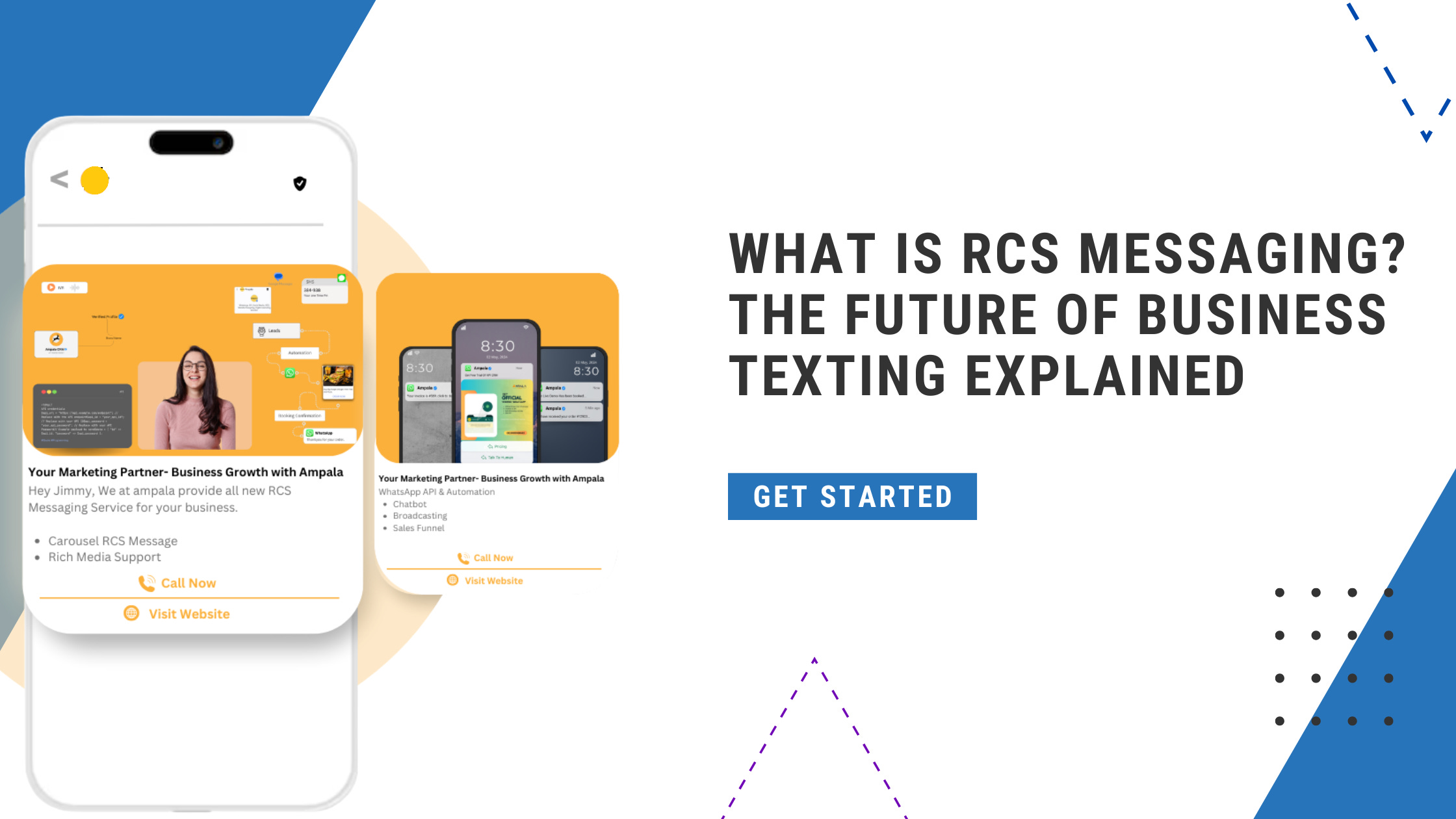
To understand the future of messaging, it is essential to answer: What is RCS Message? RCS, or Rich Communication Services, is the next-generation messaging standard designed to upgrade traditional SMS. Instead of static text, RCS delivers interactive, multimedia-rich conversations directly within the default messaging app.
With RCS, businesses can share images, videos, carousels, maps, and action buttons. In addition, features like read receipts, suggested replies, and typing indicators make conversations feel natural and conversational. Consequently, customers engage faster and respond more easily.
Another important benefit is verified branding. Companies can display their logo, brand name, and colors, which immediately builds credibility and trust. As Android adoption grows and iOS support expands, RCS is becoming more accessible. Therefore, learning What is RCS Message is now critical for brands planning long-term growth.
RCS vs SMS: Understanding the Strategic Difference
When evaluating RCS vs SMS, businesses must look beyond basic delivery. SMS focuses on universal reach, while RCS focuses on experience and interaction. Although SMS works without data, it provides limited insights beyond delivery confirmation.
In contrast, RCS requires internet connectivity but delivers advanced analytics. Businesses can track opens, clicks, and customer actions. As a result, campaigns become measurable and optimizable. Pricing models also differ. SMS usually charges per message, whereas RCS often follows session-based pricing. Nevertheless, higher engagement often offsets the cost.
Therefore, the RCS vs SMS discussion should center on purpose rather than replacement.
When SMS Still Makes the Most Sense
Despite innovation, SMS remains irreplaceable for mission-critical communication. Businesses should continue using SMS for authentication, financial alerts, service disruptions, and emergency notifications. In these scenarios, delivery reliability matters more than experience.
Additionally, SMS acts as a fallback when RCS is unavailable. Consequently, brands ensure uninterrupted communication across all devices and network conditions. In short, SMS still anchors reliability within a balanced messaging strategy.
How RCS Messages Drive Higher Engagement
An RCS Message clearly outperforms SMS in engagement-focused use cases. For example, marketing campaigns, product announcements, appointment reminders, and customer support interactions benefit from interactivity.
Because RCS includes buttons and suggested replies, customers act faster. Moreover, visual storytelling improves brand recall and boosts conversion rates. Once businesses fully understand What is RCS Message, they often shift promotional and conversational communication to this channel.
Why a Hybrid Approach Works Best
Instead of choosing between RCS vs SMS, forward-thinking businesses combine both. A hybrid model sends an RCS Message to supported devices and automatically falls back to SMS when needed. As a result, brands maximize reach while preserving engagement.
This approach reduces operational complexity and improves campaign consistency. Therefore, companies can scale messaging confidently without compromising reliability or experience.
Final Thoughts on RCS vs SMS in 2025
Ultimately, the conversation around What is RCS Message is not about eliminating SMS but about aligning tools with goals. SMS remains essential for critical alerts, while RCS defines the future of interactive customer communication.
As customer expectations continue to rise, businesses that adopt RCS early gain a strong competitive advantage. However, SMS will continue supporting foundational needs. Therefore, the smartest business messaging strategy in 2025 blends both—using SMS for guaranteed reach and RCS for meaningful, engaging conversations that truly connect with customers.